· General · 13 min read
How to Be a Pilot in Singapore: 4 Routes from $0 to $200,000 (2026 Guide)
How to be a pilot in Singapore in 2026: a step-by-step guide to all 4 routes (SIA Ab Initio Cadet, RSAF, Scoot self-sponsored, self-funded CPL) with costs from $0 to $200,000, real pilot salaries, and timelines, from a Singapore A320 Training Captain.
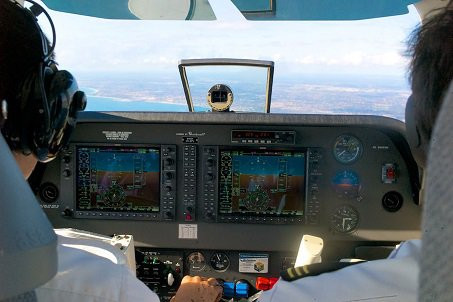
Updated May 2026 by Captain Ong, an A320 Training Captain at a Singapore LCC, ex-RSAF fighter pilot, and President of the Scoot Staff Union.
There are four realistic routes to become an airline pilot in Singapore: the SIA Ab Initio Cadet programme (fully sponsored, 7-year bond), the RSAF (paid to fly, 12-year bond), a Scoot self-sponsored cadet programme (~$200,000, job offer on completion), or a self-funded FAA or CAAS CPL ($100k to $180k, you find your own job). The cheapest paths cost you nothing. The fastest path to a captain’s seat is the self-sponsored cadet route into a Low-Cost Carrier. This guide breaks each route down with 2026 costs, salaries, and timelines.
Your dream of becoming a pilot in Singapore isn’t dead by any measure. The hiring boom of 2023 to 2026 was the biggest the industry has ever seen, and the demand has not stopped. - Captain Ong
I left the Republic of Singapore Air Force in 2016 after 1,500+ hours as a fighter pilot and Fighter Weapons Instructor. I took the FAA ATP route into a Singapore LCC, upgraded to A320 Captain in 2022, and now train other pilots. The four routes below are the same ones my colleagues and trainees took, with the trade-offs they wish someone had told them up front.
The four routes at a glance
| Route | Upfront cost | Bond | Time to First Officer/Second Officer | Time to Captain | Job certainty |
|---|---|---|---|---|---|
| SIA Ab Initio Cadet | $0 (fully sponsored) | 7 years from FO appointment | ~2 years | 12 to 15 years | Almost guaranteed on completion |
| RSAF Pilot | $0 (paid to fly) | 12 years minimum | After RSAF + ~6 to 12 months | 3 to 5 years post-RSAF (LCC) | Somewhat likely but not guaranteed |
| Scoot Self-Sponsored Cadet | ~$200,000 | Typically 4 to 5 years | ~18 months | 4 to 6 years | High (job offer on completion) |
| Self-funded CPL (CAAS or FAA) | $100,000 to $180,000 | None | Depends on airline | Depends on airline | Lowest, you find your own job |
If you are passionate about flying but can’t decide between routes, that table is the framework. The rest of this article unpacks each one.
Route 1: SIA Ab Initio Cadet Pilot
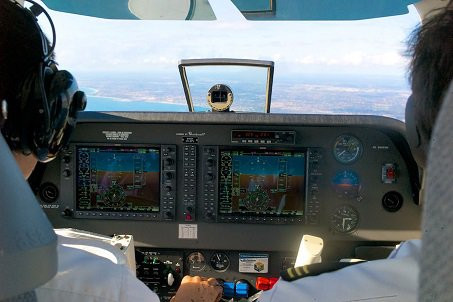
The cheapest way to get your CPL in Singapore is through the SIA Ab Initio Cadet Pilot programme. SIA takes you in with zero flying experience and pays for your full licence training at the Singapore Flying College and overseas. You receive a stipend during training. The catch: you bond yourself to SIA for 7 years from the date you become a First Officer, and command upgrade to Captain takes 12 to 15 years on average.
2026 hiring status: SIA reopened its Ab Initio recruitment after the pandemic and has been actively running selection cycles. Always check the official cadet pilot page and our Hiring Status tracker before applying.
Eligibility (current):
- Singapore citizen or PR
- GCE ‘A’ Level, Diploma, or Degree (or 5 ‘O’ Level credits including English, Mathematics, and a Science)
- Minimum height 1.58m
- Myopia not more than 800 degrees, astigmatism not more than 300 degrees, fully correctable
- Pass the SIA computer-based aptitude test, panel interview, and CAAS Class 1 medical
Captain’s take: SIA is the prestige route, but the slow command path is real. If your priority is flying widebody aircraft to long-haul destinations and earning a captain’s salary at LCC pace is not your goal, SIA is excellent. If you want to wear four bars before age 35, look elsewhere.
Singapore Airlines cadet pilot program fees
The Singapore Airlines Ab Initio Cadet Pilot programme has no upfront fees. SIA covers the full cost of training at the Singapore Flying College and partner schools overseas, including ground school, flight hours, accommodation during training, and your A320 type rating. Cadets also receive a monthly training allowance.
What it actually costs you:
- Bond: 7 years from the date you become a First Officer. Break the bond early and you repay a prorated training cost (in the SGD $250,000 to $400,000 range; SIA does not publish exact figures publicly, and the amount varies by year of recruitment).
- Time: Around 2 years of training before you fly revenue passengers.
- Opportunity cost: A junior trainee allowance during cadet training, well below an equivalent professional starting salary.
There are no programme tuition fees, examination fees, or licensing fees. Compared with the Scoot self-sponsored cadet programme (around SGD $200,000) or a self-funded CAAS CPL (SGD $150,000 to $180,000), SIA’s economics are the best in Singapore, provided you are willing to stay for the duration of the bond.
If you fail to complete training through no fault of your own, SIA generally writes off the cost (subject to the specific termination clause in your contract). If you complete training and resign before the 7 years are up, expect to repay the bonded amount on a prorated basis. Always read the bond document carefully before signing.
Route 2: RSAF Pilot
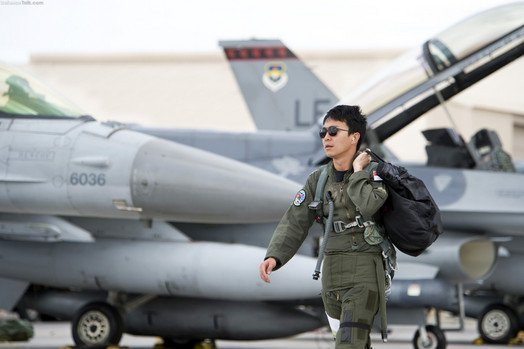
The Republic of Singapore Air Force is the only organisation that pays you a full salary while you learn to fly. The RSAF doesn’t directly issue you a CAAS CPL, but the hours, instrument training, and crew experience you accumulate are the prerequisites for a USA FAA Airline Transport Pilot (ATP) licence, which you can then convert to a CAAS CPL with frozen ATPL.
The bond is long: a minimum of 12 years. But the RSAF pays its pilots well, and after the bond you have a fully sponsored, world-class flying foundation that your peers who spent $200,000 can only dream of matching.
After 12 years you can get your FAA ATP and apply for an airline job. Step-by-step transition guides exist for Fighter, Transport, and Helicopter pilots.
If pilot selection doesn’t go your way, the WSO (Fighter) path is a credible plan B. A WSO (Fighter) earns enough during their bond to self-fund a CPL transition. Read about the WSO Fighter to Airline transition.
2026 hiring status: The RSAF is always recruiting, but they tend to hire only young candidates. Visit the RSAF Pilot career site.
Captain’s take: I took this path. I served as an RSAF fighter pilot and Fighter Weapons Instructor before transitioning to a Low-Cost Carrier. The 12-year bond looks long when you are 18, but you walk out of it with a salary the entire time, a network of squadron mates who become your industry, and skills no civilian training will replicate. If you can pass the COMPASS and Pilot Selection Board, this is the highest expected-value route in the country.
Route 3: Scoot Self-Sponsored Cadet Programmes
Scoot periodically opens self-sponsored cadet programmes. You still pay for your training (around $200,000), but the airline guarantees you a job at the end, subject to performance. That job certainty is the entire value proposition: getting your own CPL with no airline backing leaves you a $180,000-poorer applicant in a competitive market.
Scoot reopened self-sponsored cadet recruitment from late 2021 onwards and has run cohorts through the post-COVID hiring boom. With Jetstar Asia ceasing operations, Scoot is now the only low-cost carrier cadet route in Singapore. Check our Hiring Status tracker for the latest cycle.
Eligibility (current):
- Singapore citizen or PR
- GCE ‘A’ Level, Diploma, or Degree (minimum 5 ‘O’ Level credits including English, Mathematics, and a Science)
- CAAS Class 1 medical clearance
- Pass Scoot’s aptitude assessment and panel interview
- No upper age limit published, but candidates in their 20s to mid-30s are typical
What the training looks like: Training is typically conducted overseas at partner flight schools. You’ll complete your CPL with frozen ATPL in around 12 to 18 months, followed by an A320 type rating. The type rating is usually included in the programme cost, unlike a self-funded CPL where you pay for it separately.
The bond: Typically 4 to 5 years from the date of employment as a Second Officer. This is significantly shorter than SIA’s 7-year bond and the RSAF’s 12-year minimum.
2026 hiring status: Scoot has been running regular cadet cycles since late 2021 and continues to grow its fleet and pilot base. Check our Hiring Status tracker for open applications.
Captain’s take: This is the route I recommend most often to people who can afford it but do not want to gamble. You skip the SIA bond length, you skip the RSAF 12-year commitment, and you reach the right-hand seat in roughly 18 months. Command upgrade at an LCC is 4 to 6 years, much faster than SIA. The $200,000 investment buys you something no other route offers: certainty.
Route 4: Self-funded CPL (FAA or CAAS)
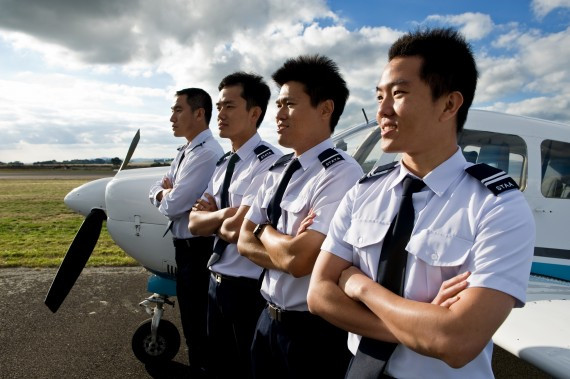
If you can’t get into the SIA, RSAF, or Scoot programmes, the last route is to self-fund your own CPL and find work afterwards. We have a dedicated breakdown of the advantages and disadvantages of FAA CPL versus CAAS CPL, but the short version is below.
Doing your CPL in the USA (FAA)
Getting an FAA CPL in the USA, including living expenses for roughly six months, costs approximately SGD $100,000. The licence lets you work in the USA and many other countries. Starting US salaries for fresh CPL holders are low because US airlines hire ATP holders only, so you spend the first few years at regional or charter operators building hours.
Doing your CPL in Singapore (CAAS)
CAAS only recognises 2 Approved Training Organisations: Singapore Flying College (SFC) and Australian Airline Pilot Academy (AAPA). Both conduct most of the actual flying in Australia. SFC does ground school in Singapore and the flying phase in Australia; AAPA runs the entire programme in Australia.
Total programme length is around 12 months. Total cost: at least SGD $150,000. Detailed cost breakdown here.
Captain’s take: Going fully self-funded with no programme guarantee is the riskiest option. I would only recommend this if you have a clear backup plan and you have the financial cushion to survive a year or two of job search after qualification.
Eligibility requirements at a glance
The exact bar varies between programmes, but these are the common minimums airline cadet selection looks for in 2026:
- Citizenship: Singapore citizen or PR for SIA, Scoot, and RSAF
- Age: 18+ for cadet programmes; RSAF up to early 20s
- Education: GCE ‘A’ Level, Diploma, or Degree (5 ‘O’ Level credits including English, Math, Science as the absolute floor)
- Eyesight: Myopia up to 800 degrees, astigmatism up to 300 degrees, fully correctable. Glasses and contact lenses are fine
- Height: 1.58m minimum for SIA; RSAF has cockpit-fit requirements (different per platform); Not published for Scoot
- Medical: CAAS Class 1 medical for civilian, RSAF aeromedical board for military
- Aptitude: SIA and Scoot use a computer-based test; RSAF uses COMPASS
Pilot salaries in Singapore (2026)
Money is rarely the only reason people fly, but you should know the numbers. These are typical 2026 ranges across SIA and Singapore-based LCCs combined:
- Second Officer (fresh cadet, before line check): SGD $24,000 to $75,000
- First Officer (newly promoted): SGD $95,000 to $150,000
- First Officer (senior, full allowances): SGD $150,000 to $195,000
- Captain (newly upgraded): SGD $235,000 to $250,000
- Senior Captain or training Captain: SGD $300,000+
Pay is base salary plus per-flight-hour, per-night-stop, and long-haul allowances, so the variability between rosters and fleet is real. For a deeper look, see Lifetime Earnings: RSAF vs Commercial Pilots.
Timeline: how long does it take?
A realistic 2026 timeline from zero experience to right-hand seat in a Singapore airline:
- Cadet selection and training: 18 to 24 months
- Type rating on your assigned aircraft: 3 to 4 months
- Line training before unrestricted operation: 2 to 4 months
- Total from selection to revenue First Officer: ~2 years for SIA Ab Initio, ~18 months for Scoot self-sponsored
Command upgrade after that ranges from 3 to 5 years at an LCC to 12 to 15 years at SIA.
The medical examination step
Whichever route you take, a CAAS Class 1 (civilian) or RSAF aeromedical (military) examination is non-negotiable. Book this early, before you spend any money. A medical disqualification at this stage is far cheaper than discovering it after you have signed a bond. Find an approved CAAS Class 1 examiner via the CAAS Personnel Licensing site.
Frequently asked questions
How much does it cost to become a pilot in Singapore?
Free if you join SIA Ab Initio or the RSAF. Around SGD $100,000 if you self-fund an FAA CPL in the USA. SGD $150,000 to $180,000 for a self-funded CAAS CPL, or around SGD $200,000 for a Scoot self-sponsored cadet programme.
How long does it take to become an airline pilot in Singapore?
Around 18 to 24 months from cadet selection to flying revenue passengers as a Second or First Officer. The RSAF route adds 12 years of military service before commercial transition.
Can I become a pilot in Singapore if I wear glasses?
Yes. CAAS Class 1 standards allow myopia up to 800 degrees and astigmatism up to 300 degrees, fully correctable. Most cadet pilots wear glasses or contact lenses.
Is SIA hiring cadet pilots in 2026?
SIA reopened Ab Initio recruitment after the pandemic and has been running active selection cycles. Always confirm with the official SIA cadet pilot page and our Hiring Status tracker.
Is the RSAF or SIA the better route?
It depends on your priorities. The RSAF pays you a full salary while training and has the highest expected lifetime earnings if you complete the bond and convert. SIA gets you to a widebody flight deck faster and into the global airline industry directly, but command upgrade is slow.
Can I become a pilot in Singapore without a degree?
Yes. The minimum education requirement for SIA Ab Initio is 5 GCE ‘O’ Level credits, including English, Mathematics, and a Science subject. A degree is definitely an advantage and it helps in panel interviews but is not a hard requirement.
What’s the minimum height to become a pilot in Singapore?
1.58m for SIA. The RSAF has platform-specific cockpit-fit checks rather than a single minimum. Nothing published for Scoot.
Do I need to know how to fly before applying?
No. Scoot and SIA cadet programmes assume zero flying experience. RSAF selection is purely on aptitude and aeromedical. The Singapore Youth Flying Club (SYFC) is useful prep, but it is not a prerequisite. Knowledge and genuine interest in aviation help during the selection and interview.
Which route would I pick today?
If I were 18 and starting today, knowing what I know after 1,500+ hours in the RSAF and a command upgrade in the civilian world, this is what I would do, in order:
- Apply for the RSAF Pilot scheme. It costs you nothing, pays you well, and the post-bond conversion to civilian flying is well-trodden. I gained lessons and experiences in the RSAF that many can only dream of.
- If that doesn’t work out, apply for SIA Ab Initio. Free training, guaranteed job, prestige carrier.
- If neither, go Scoot self-sponsored cadet. $200,000 with a job offer is far better economics than $180,000 with no offer.
- Last resort: self-funded FAA CPL. Cheaper than CAAS, gives you US optionality, but you carry the job-search risk yourself.
I built the rest of this site to demystify each of those routes. I also document my own working life as a pilot using tools I have built, including a personal AI agent system at OpenClaw that handles my flight roster, OFP archival, and daily admin. If aviation in Singapore is your dream, the information you need is now all in one place.
A pilot’s career is unlike any other. It is not all glamour, but it is one of the best jobs in the world. Don’t give up.
If you want a deeper read after this, start with The Career of an Airline Pilot or How a RSAF Pilot’s Career Looks Like.